All Categories
Featured
Table of Contents
Handling worker schedules can rapidly become time-consuming and costly for an organization, particularly with inefficient procedures and out-of-date software application. Developing, adjusting, and handling a large number of staff members' schedules, accommodating all the discrepancies, and monitoring modifications can take some time and focus far from managers and HR staff who must be spending most of their energy on supporting their employees.
It's a no-brainer for business to embrace modern-day scheduling software application to decrease the time and labor expenses in employee scheduling. Particularly with the labor scarcity, United States business are focusing on getting the most out of their labor force, and an important part of optimizing performance is optimizing time & labor management. In order to prevent burnout, keep staff members delighted, and remain effective and productive as an organization, it is vital that business develop optimized staff member schedules.

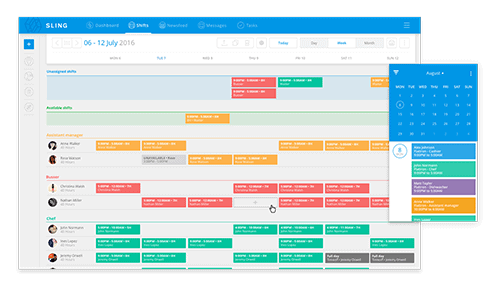
Business might want to think about an HR SWOT Analysis, with the objective of evaluating their present scheduling procedures and techniques to identify space for improvement. Scheduling software makes it easy to handle worker schedules in real-time - altering, moving, and scheduling employee shifts within one system. Automated alerts can be sent out to all staff members when schedules are published, reducing chaos in interacting and collaborating schedule modifications.
Modern Staff Scheduling Methods for Maximum Efficiency
Set rules for who is able to be assigned to a specific shift Overview who is qualified for a shift At-a-glance information of which workers are unavailable to work Instantaneous signals generated and noticeable when schedules are developed and pressed live Allow workers to request which shifts they wish to work Keep shifts in draft kind as managers and managers edit schedules Allow workers to request coverage for a shift within a swimming pool of fellow workers At the core, scheduling software improves manual scheduling processes, releasing supervisors from repetitive administrative jobs, permitting them to focus on more business-critical work.
It's also much easier to preserve compliance with local, state, and federal labor laws when you have a system to depend on for tracking regulative changes and setting up alarm activates when there's a potential infraction. A scheduling system also offers companies presence on staffing challenges and chances, helping companies make informed decisions and shift focus to value-added company operations.
Embracing scheduling software application can make the entire procedure easier and more effective. Contact us today for a demo of our scheduling software application. is an experienced specialist in human resources and payroll operations, currently serving as the Assistant Director of Operations at The Human Resource Consulting Group. Jodi has actually been a Certified Payroll Professional (CPP) because 2007.
Her deep understanding of payroll intricacies, combined with her management skill, enables her to simplify processes, improve efficiency, and maintain the highest standards of service.
Spreadsheets and fixed schedules might work for little groups or short-term needs. They hardly ever scale as your service and labor force grow. Modern labor force scheduling software application does more than just appoint shifts. When attentively crafted, the right tools can enhance service levels, control labor costs, empower representatives, and reduce the work for planners and supervisors.
Understanding Business Lending Rules in 2026
In a contact center, demand can alter by the hour, whether due to customer query spikes, unexpected agent absences, or a service interruption. A strong scheduling option should enable workforce managers to adjust staffing strategies in genuine time, based on intraday conditions. This versatility helps groups stay agile and re-optimize schedules on the fly, keeping operations running even when things do not go as prepared.
At the exact same time, it reduces the administrative burden on workforce supervisors and planners cuts down on and last-minute changes. Discover more about Transparent schedules assist agents stay notified and supervisors stay in control.
This helps workforce supervisors make faster, more informed scheduling decisions while reducing coverage gaps. It also makes it possible for representatives to immediately see readily available and not available times for schedule modifications, decreasing guesswork and back-and-forth communication with managers during shift changes or time-off demands. Approval insights utilize staffing data to show staff members how likely a schedule change or time-off demand is to be approved.
Have concerns about labor force scheduling features? Through mobile gain access to, representatives can view schedules, request time off, trade shifts, and get notices any place they are.

Latest Posts
Why SME Automation Reduces Overhead Costs By 2026
Comparing Inventory Costs with Staff Scheduling
Using Data-Driven Workforce Models to Higher ROI